
By Tommaso Barba, MSc, PhD
Research Scientist, Centre for Psychedelic Research, Imperial College London
Why the people around us during a psychedelic experience may shape its effects as much as the substance itself.
Picture the scene that has come to define modern psychedelic science. A single participant lies on a bed in a softly lit room, eyeshades on and headphones playing a carefully curated playlist, while two trained guides sit quietly nearby. This arrangement has produced some of the most important findings in contemporary psychiatry, and for good reason, since it allows researchers to control almost everything except the experience itself. Historically speaking, however, it is a strange way to take a psychedelic.
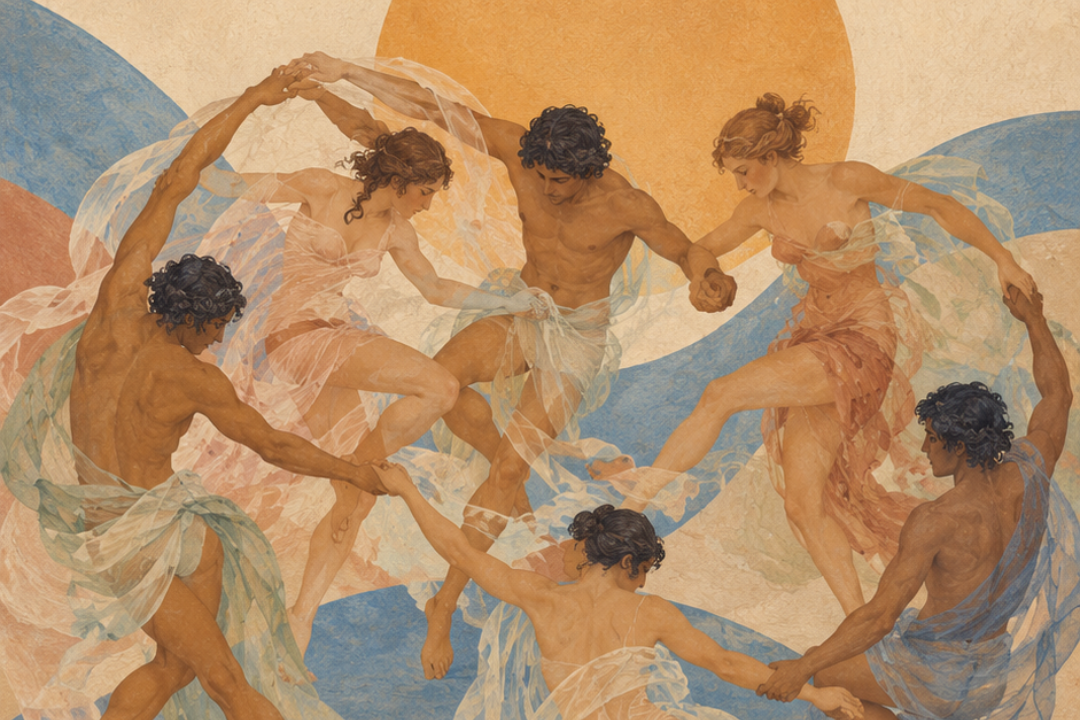
In the Amazon, ayahuasca is drunk in ceremonies that can gather dozens of people through the night, peyote has long been taken in shared prayer meetings, and in recent decades enormous numbers of people have taken psychedelics at festivals and raves surrounded by strangers. As the anthropologist Martha Newson and her colleagues put it, “psychoactive drugs have been central to many human group rituals throughout modern human evolution” (Newson et al., 2021).
This raises a question that the clinical model, by design, cannot answer. If psychedelics have mostly been taken together, could part of what makes them helpful lie not inside the individual brain but in the space between people? A small but growing body of research suggests that it might, and it has borrowed a word from anthropology to describe what it is finding. That word is communitas.
What is Communitas? An Old Idea From Anthropology
A Puzzle in Zambia
The concept was born from a puzzle. In the 1950s the anthropologist Victor Turner was living among the Ndembu people of what is now Zambia, and he noticed that the rituals marking life transitions did something that ordinary village life did not. Everyday Ndembu society, like most societies, was organised around rank, kinship and obligation, yet during initiation people who would normally relate to one another as superior and inferior seemed to meet as equals, and the bonds formed there endured.
Turner built on the earlier work of Arnold van Gennep, who had observed that rites of passage across cultures tend to unfold in three stages, beginning with separation from ordinary life, passing through a threshold period, and ending with a return to the community in a new role (van Gennep, 1960).
Betwixt and Between
It was the middle, or liminal, stage that fascinated Turner. Initiates were stripped of the names, clothing and possessions that marked their place in the village, and in his words they became “neither here nor there; they are betwixt and between the positions assigned and arrayed by law, custom, convention, and ceremonial” (Turner, 1969, p. 95).
Out of this shared condition of being nobody in particular, he argued, there emerged a distinctive quality of relationship, a sense of society as a “communion of equal individuals who submit together to the general authority of the ritual elders” (Turner, 1969, p. 96). He called it communitas.
Turner was not writing about drugs, but his description will be familiar to anyone who has sat through a long night in an ayahuasca circle or danced until sunrise in a field. Ordinary roles fall away, the person beside you stops being a stranger, and for a while the group can feel like a single living thing. The question for science was whether this feeling could be measured, and whether it made any difference to people’s lives once the ritual was over.
Measuring Psychedelic Communitas and Togetherness
The First Communitas Study
The first serious attempt to answer that question came from the Centre for Psychedelic Research at Imperial College London. Hannes Kettner and colleagues adapted an existing communitas questionnaire to capture what they described as “acute relational experiences of perceived togetherness and shared humanity”, and gave it to 886 people who were already planning to attend a psychedelic ceremony or retreat (Kettner et al., 2021).
Participants were surveyed five times, from two weeks before their ceremony to four weeks after leaving the retreat, which allowed the researchers to see whether what happened in the room predicted how people were doing a month later.
It did. People who reported stronger communitas during the ceremony showed greater increases in psychological wellbeing and social connectedness at follow-up, and although the associations were modest in size, as most single influences in psychology are, they held across a large sample. The more revealing finding concerned how this worked.
The benefit of communitas during the ceremony passed entirely through the sense of communitas that people felt across the retreat as a whole, and that wider sense of togetherness was fed by how much participants opened up to one another, by their relationship with the facilitators, and by the emotional support they received.
The Morning After
In practice, this points away from the dramatic peak of the night and towards the quieter moments around it. Imagine someone who spends a ceremony alone with a painful memory, convinced that nobody else could understand it, and who then sits in the sharing circle the next morning and hears a stranger describe almost exactly the same grief. The study cannot tell us what happened inside any one person, but its results suggest that moments like this, as much as the visions themselves, are where much of the lasting effect is built.
As Strong As a Mystical Experience
A later study from the same group put the finding in perspective. When Rosalind Watts and colleagues developed a scale to measure connectedness to self, others and the world, they found that communitas during a psychedelic experience predicted later gains in connectedness exactly as strongly as mystical experience did (Watts et al., 2022). For a field that has long treated the mystical experience as the key ingredient of a psychedelic’s benefit, that is a notable result.
When The Company Matters More Than The Psychedelic Experience
Older Adults and The Retreat Effect
Perhaps the most striking evidence comes from a group that psychedelic research has largely overlooked. Older adults are rarely included in clinical trials, even though loneliness is one of the most common and damaging features of later life. Using data from the same retreat study, Kettner and colleagues compared 62 participants aged 60 or over with 62 younger participants matched to them (Kettner et al., 2024).
Both groups showed significant improvements in wellbeing after their retreat. In the younger group, as in most psychedelic studies, the intensity of the acute drug experience predicted how much people improved, whereas in the older group the drug effects were noticeably weaker and did not predict the outcome at all. What did predict it was communitas.
For these older participants, then, the relational side of the experience appeared to carry the benefit even when the pharmacological side was muted, which fits with what research on loneliness has taught us about how much connection matters to health as we age. Because this was an observational study of people who chose to attend retreats, it cannot prove cause and effect, but it does suggest that for some people the group may be doing a great deal of the work.
Couples Who Trip Together
A related pattern has emerged in research on romantic couples. In a study of couples who had used psychedelics, taking a psychedelic together was associated with a stronger sense of shared reality between partners, which in turn was linked to greater closeness, intimacy and relationship satisfaction, whereas using psychedelics alone was indirectly associated with the decision to end the relationship (Cornelius & Barba, 2026). Communitas, it seems, can operate at the scale of two people as well as twenty.
Festivals, Raves and The Limits of The Bond
Six Festivals, 1,200 People
Ceremonies and retreats are carefully held spaces, so a natural question is whether any of this survives in the messier world of festivals. A team led by Matthias Forstmann and Molly Crockett set out to find out, surveying more than 1,200 people across six multiday mass gatherings in the United States and the United Kingdom (Forstmann et al., 2020).
People who had recently taken a psychedelic reported more positive mood, and the statistical pathway ran through two steps, first through a sense of having had a transformative experience and then through feeling more socially connected to others. The effect was strongest among those who had taken a psychedelic within the previous 24 hours.
Dance, Drums, Sleep Deprivation and Drugs
Newson and her colleagues looked more closely at raves and at what they call the “4Ds” of ritual altered states, namely dance, drums, sleep deprivation and drugs (Newson et al., 2021). Among people recalling a memorable rave, those who found the event awe-inspiring and felt personally transformed by it reported lasting bonds with their fellow ravers, and they were more willing to give something up for the sake of that group in a simple economic game.
Two details make this study especially useful. The bond extended to the local community of ravers but not to humanity as a whole, and when the same ingredients were present without awe or a ritual context, they were associated with what the authors describe as “a lack of personal growth, or anomie”. The drugs and the dancing were not enough by themselves, and the meaning people found in the event seemed to decide which way it went.
The Shadow Side of Oneness
Ayahuasca Across a Conflict
It would be easy to read all this as proof that psychedelic togetherness is simply good, but the most thoughtful work in this area suggests something more complicated. Leor Roseman and colleagues interviewed 31 Israelis and Palestinians who had drunk ayahuasca together (Roseman et al., 2021).
Many described moments of oneness in which national and religious identities seemed to dissolve, as well as moments of deep connection to the other culture, often through hearing its songs or prayers during the ceremony. These are exactly the experiences that make communitas sound like a tool for peacebuilding.
In a companion paper drawing on the same interviews, however, Roseman and the anthropologist Nadeem Karkabi argued that the feeling of unity could also smooth over real injustice (Roseman & Karkabi, 2021). Because the groups tended to avoid politics, the harmony in the room sat alongside a structure in which Palestinian national identity went largely unrecognised.
Some Palestinian participants had experiences during ceremonies that confronted them with that imbalance, which led them to resist the ritual structure and, over time, to bring the practice to other Palestinians in a more openly political form. Communitas, in other words, is not neutral. A shared feeling of oneness can open people to one another, but it can also make it harder to notice who in the circle is not being seen.
Communitas Without the Drug
Another study raises a different kind of question. David Glowacki and colleagues built a shared virtual reality experience in which groups of people perceived their bodies as diffuse, luminous forms that could merge with one another, and found that participants’ communitas scores were statistically indistinguishable from those reported in published psychedelic studies (Glowacki et al., 2022). If a carefully designed shared experience can produce similar feelings without any drug, then at least part of psychedelic communitas may belong to the shared ritual frame rather than to the molecule.
Bringing The Group Back Into The Clinic
A Ritual Built Into a Trial
These findings are beginning to shape how psychedelic therapy itself is designed. At the University of Washington, Anthony Back and colleagues developed a group retreat model of psilocybin therapy for people with metastatic cancer that borrows directly from the anthropology of ritual (Back et al., 2025).
Preparation sessions correspond to separation, the psilocybin session to the liminal phase, and integration to the return, so that each person’s experience is held within what the team calls “a shared field of intention and care”. The authors describe it as the first FDA-approved clinical trial of a ritual-based group model of psychedelic therapy. When thirteen participants who had only partly responded returned for a second retreat, their sense of social support, identification with the group and group cohesion rose steadily and remained elevated six months later (Back et al., 2026).
What The Evidence Can and Cannot Yet Say
Group models also have practical appeal, since treating several people at once could make psychedelic therapy more affordable and easier to scale. The evidence, though, is still young. A systematic review published in October 2026 identified 30 papers describing 22 group protocols, and while outcomes were generally encouraging, only a minority of studies included a comparison group and only one was a modern randomised controlled trial (Tsang et al., 2026).
Much of what we know about communitas also comes from people who chose to attend ceremonies and may have been especially open to the experience, which makes it difficult to separate the effect of the group from the hopes people brought with them.
The Company We Keep: The Role of Togetherness in Psychedelic Experiences
What this research offers is less a final answer than a change in the question. For most of the past two decades, psychedelic science has asked what these substances do to the brain of the person taking them. The study of communitas asks something older, about who we are with when the ordinary boundaries of the self begin to loosen, and what we build together once they return.
Turner believed that standing betwixt and between, stripped of our usual roles beside others in the same position, was one of the oldest ways humans have of renewing their bonds. Psychedelic science is only beginning to measure it, but the early evidence suggests that some of the healing may lie less in the molecule than in the company kept along the way.
About the Author
Tommaso Barba
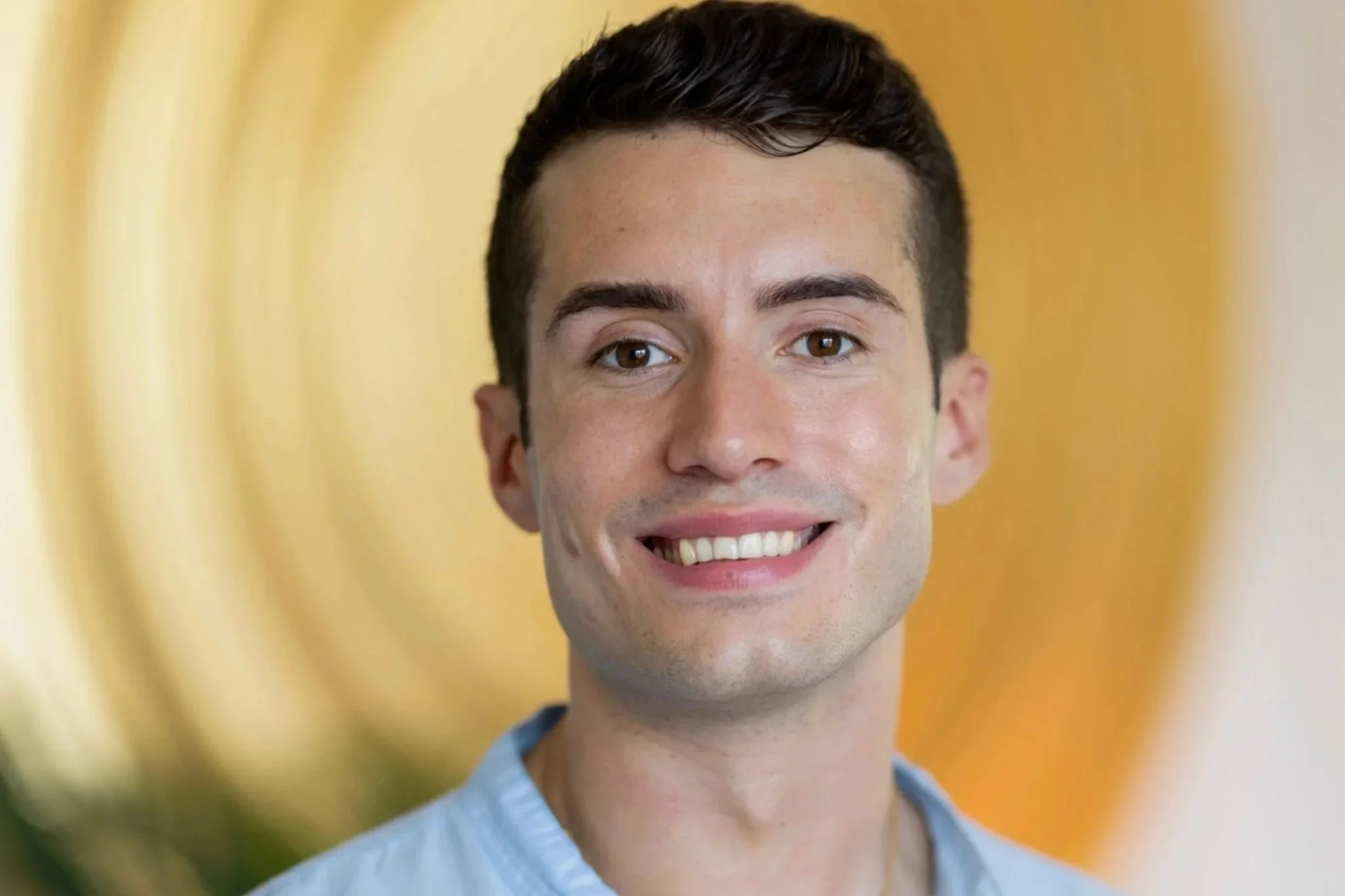
Tommaso Barba is a PhD research scientist at the Centre for Psychedelic Research at Imperial College London. His research explores the effects of psychedelic compounds on the brain, well-being, and human flourishing, with particular interest in short-acting psychedelics such as 5-MeO-DMT.
His work also investigates the potential role of psychedelic substances in relationships, intimacy, and sexual well-being. Tommaso authored the first research study examining the long-term effects of psychedelic use on sexual functioning.
He is currently involved in the world’s first naturalistic research study exploring the impact of psilocybin combined with psychological support on relationship wellbeing in collaboration with Beautiful Space.
References
Back, A. L., McGregor, B. A., Billingsley, L., Blom, D., Callan, G., Myers, S., Guy, J., Kumar, S., Layer, M., Levin, J., Perez, J., Thompson, P., Salmonson, K., Whinney, J., & Thorn, L. L. (2025). Group retreat psilocybin therapy for people with metastatic cancer with anxiety and depression: A rite of passage facilitation model for a phase 1/2 study. Psychedelic Medicine, 4(3), 222–230. https://doi.org/10.1177/28314425251404460
Back, A. L., McGregor, B. A., Thorn, L. L., Harvey, K., Blom, D., Callan, G., Guy, J., Kumar, S., Hershberg, R., Layer, M., Levin, J., Myers, S., Perez, J., Salmonson, K., Thompson, P., & Whinney, J. (2026). A phase 1 study of a second experience with group retreat psilocybin therapy for partial responders after a first experience. Frontiers in Public Health, 14, 1810904. https://doi.org/10.3389/fpubh.2026.1810904
Cornelius, T., & Barba, T. (2026). Associations of couples’ psychedelic use with shared reality and relational well-being. Journal of Psychoactive Drugs, 1–11. https://doi.org/10.1080/02791072.2025.2607729
Forstmann, M., Yudkin, D. A., Prosser, A. M. B., Heller, S. M., & Crockett, M. J. (2020). Transformative experience and social connectedness mediate the mood-enhancing effects of psychedelic use in naturalistic settings. Proceedings of the National Academy of Sciences, 117(5), 2338–2346. https://doi.org/10.1073/pnas.1918477117
Glowacki, D. R., Williams, R. R., Wonnacott, M. D., Maynard, O. M., Freire, R., Pike, J. E., & Chatziapostolou, M. (2022). Group VR experiences can produce ego attenuation and connectedness comparable to psychedelics. Scientific Reports, 12(1), 8995. https://doi.org/10.1038/s41598-022-12637-z
Kettner, H., Roseman, L., Gazzaley, A., Carhart-Harris, R. L., & Pasquini, L. (2024). Effects of psychedelics in older adults: A prospective cohort study. American Journal of Geriatric Psychiatry, 32(9), 1047–1059. https://doi.org/10.1016/j.jagp.2024.05.007
Kettner, H., Rosas, F. E., Timmermann, C., Kärtner, L., Carhart-Harris, R. L., & Roseman, L. (2021). Psychedelic communitas: Intersubjective experience during psychedelic group sessions predicts enduring changes in psychological wellbeing and social connectedness. Frontiers in Pharmacology, 12, 623985. https://doi.org/10.3389/fphar.2021.623985
Newson, M., Khurana, R., Cazorla, F., & van Mulukom, V. (2021). ‘I get high with a little help from my friends’: How raves can invoke identity fusion and lasting co-operation via transformative experiences. Frontiers in Psychology, 12, 719596. https://doi.org/10.3389/fpsyg.2021.719596
Roseman, L., & Karkabi, N. (2021). On revelations and revolutions: Drinking ayahuasca among Palestinians under Israeli occupation. Frontiers in Psychology, 12, 718934. https://doi.org/10.3389/fpsyg.2021.718934
Roseman, L., Ron, Y., Saca, A., Ginsberg, N., Luan, L., Karkabi, N., Doblin, R., & Carhart-Harris, R. (2021). Relational processes in ayahuasca groups of Palestinians and Israelis. Frontiers in Pharmacology, 12, 607529. https://doi.org/10.3389/fphar.2021.607529
Tsang, V. W. L., Bhatia, F., Ferrey, A., & Hartmann-Boyce, J. (2026). Group psychedelic-assisted therapy for mental health conditions: A mixed-methods systematic review. Frontiers in Public Health, 14, 1788352. https://doi.org/10.3389/fpubh.2026.1788352
Turner, V. (1969). The ritual process: Structure and anti-structure. Aldine.
van Gennep, A. (1960). The rites of passage (M. B. Vizedom & G. L. Caffee, Trans.). University of Chicago Press. (Original work published 1909)
Watts, R., Kettner, H., Geerts, D., Gandy, S., Kartner, L., Mertens, L., Timmermann, C., Nour, M. M., Kaelen, M., Nutt, D., Carhart-Harris, R., & Roseman, L. (2022). The Watts Connectedness Scale: A new scale for measuring a sense of connectedness to self, others, and world. Psychopharmacology, 239(11), 3461–3483. https://doi.org/10.1007/s00213-022-06187-5